

Quick Facts:
This proposal was first shared with the community at the Bond Community Forum on October 28, 2025 – see presentation here.
The proposal was designed to address facility needs across Ravenna Public Schools. Improvements are focused on safe, comfortable, and secure schools, modern learning environments, and responsible use of community dollars
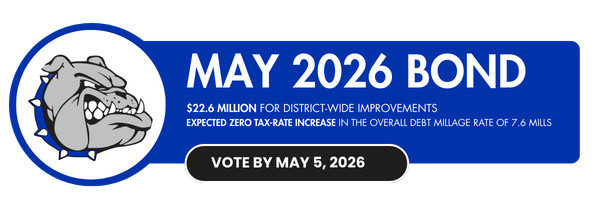
The proposal would allow the district to borrow $22.6 million for improvements throughout the district
Why now?
Facility needs are growing.
Ravenna Public Schools has aging buildings and infrastructure that need attention, especially at Beechnau Elementary, along with roof, safety, and transportation needs across the district.
Additional Revenues from Solar Farm.
The Moorland Solar Farm provides new annual revenue that would be available to help repay the bonds, allowing improvements to move forward without increasing the millage rate above the 7.6 mills levied in 2025. Without bond approval, the district’s ability to address the full range of identified facility needs using this revenue would be limited.
Timing and Cost Factors.
The bonds would allow the district to address needs before they become more costly and disruptive.
Guided by Feedback and Assessment
The 2026 Bond proposal was developed over the past year through building assessments, public forums, and direct feedback from parents, staff, and community members following the previous bond proposal. That input was used to reassess needs, adjust priorities, and refine the scope of projects, resulting in a proposal that more closely reflects district conditions, community concerns, and responsible use of resources.
What’s Included in the Bond?
District-Wide Improvements
These projects address shared needs across the entire district, helping ensure schools are safe, reliable, and able to support daily learning and operations.
- Safety and security improvements across school buildings
- Infrastructure upgrades that support dependable building systems
- Technology improvements that support instruction, communication, and operations
- Updates to aging systems to improve comfort, efficiency, and long-term reliability
Beechnau Elementary
A comprehensive set of improvements designed to modernize the building, improve comfort, and create safer, more functional learning spaces for students and staff.
- Full facility upgrades including HVAC
- Updated learning spaces
- Playground improvements
- New windows and doors
- Plumbing and mechanical upgrades
Middle School
Building improvements that would address aging systems and support a safer, more comfortable learning environment.
- Roof replacement
- HVAC upgrades
Band & Choir
Improvements that support student participation, performance, and access to music programs.
- Classroom remodel
- New instruments
Hands-On Learning Projects
Improvements to promote hands-on, project-based learning that goes beyond screens. More opportunities to "learn by doing".
Transportation
Improvements that support student safety, reliability, and efficiency in daily transportation operations.
- New school buses
- Paved bus lot
- Lighting upgrades at the bus garage
Athletics
Facility and equipment upgrades that support student athletes, school events, and community use.
- Track replacement
- Athletic equipment upgrades, including scoreboards, press boxes, and mats.
Voting Information
Vote by May 5, 2026
Election Day:
May 5, 2026 (polls open 7 a.m. – 8 p.m.)
Absentee voting:
Begins March 27, 2026
Michigan voters who want to automatically receive an absentee ballot in the mail for every election can join the Permanent Mail Ballot List by checking the appropriate box on their absentee ballot application. Once a voter is on this list, their local clerk will send them an absentee ballot for each future election for which they are eligible without needing to submit a new request each time.
Visit michigan.gov/vote for:
- Poll locations
- Absentee ballot requests
- Voter registration information
Informational Events
Learn more about the bond at our community events, hosted by Justin Wilson, future Superintendent of Ravenna Schools.
Feb 12: Community Forum #4 — 6pm @ Beechnau Elementary School
March 24: Community Forum #5 — 6pm @ Beechnau Elementary School
April 28th: Community Forum #6 — 6pm @ Beechnau Elementary School
Frequently Asked Questions
Bond Overview & Purpose
What is the May 2026 Ravenna Public Schools bond proposal?
The May 2026 bond proposal asks voters to consider authorizing Ravenna Public Schools to borrow up to $22.6 million to make district-wide facility and infrastructure improvements. Bond funds may only be used for capital projects generally identified in the ballot question such as building repairs, safety upgrades, and long-term equipment, not for day-to-day operating costs.
Why is the district proposing a bond at this time?
District facilities have aging systems and infrastructure that need to be addressed in order to remain safe, functional, and supportive of student learning. Recent facility assessments, combined with community input, identified needs that cannot be addressed through the district’s annual operating budget alone. The Moorland Solar Farm provides new annual revenue that would be available to help repay the bonds, allowing improvements to move forward without increasing the millage rate above the 7.6 mills levied in 2025.
How were the proposed projects and costs identified?
The district worked with professional architects, engineers, and construction experts to assess building conditions and long-term needs. The Board of Education also sought community feedback through surveys, conversations, and public forums. Projects were prioritized based on safety, educational impact, remaining useful life of systems, and responsible use of taxpayer dollars.
What are the primary goals of this bond proposal?
The bond proposal is focused on providing safe, secure, and healthy school environments, updating aging systems and infrastructure, supporting modern teaching and learning spaces, and making responsible long-term investments in district facilities.
What is the total amount of funding the bond would generate?
If approved, the bond proposal would authorize the district to borrow up to $22.6 million in funding for facility and infrastructure improvements across the district.
Projects & Scope of Work
What are the key projects included in the bond proposal?
Projects include district-wide facility improvements, major upgrades at Beechnau Elementary, a new roof and HVAC upgrades at the Middle School, improvements to transportation facilities and buses, athletic facility improvements, and updates to instructional and learning spaces. Final project scopes may be refined as work progresses, but all expenditures must align with voter-approved purposes.
Identified Projects at Ravenna Public Schools
What is the overall condition of district buildings and infrastructure?
Many district buildings and systems are at or beyond their expected lifespan. Aging HVAC systems, roofing, safety features, and site infrastructure require significant improvements to prevent failures, improve efficiency, and maintain safe learning environments.
What is the condition of the Middle School roof?
The Middle School roof is nearing the end of its useful life. Portions of the roof have an estimated 2 to 4 years of service life remaining, while other sections are expected to last approximately 5 to 7 more years. Over the past several years, the district has completed multiple repairs and inspections to address ongoing issues. Based on the age, condition, and increasing maintenance needs, a full roof replacement is recommended as the most cost-effective long-term solution. The estimated cost for replacing all roof sections is approximately $1.2 million, with replacement planned in the coming years.
Financial Impact & Taxes
What is a mill, and how does it affect my property taxes?
A mill is a unit used to calculate property taxes. One mill equals $1 in taxes for every $1,000 of a property’s taxable value. For example, a home with a taxable value of $100,000 would pay $760 per year at a 7.6-mill rate.
What happens to the overall debt millage rate if the bond proposal is approved?
If the bond is approved, the overall debt millage rate is not projected to increase. The district expects to continue levying 7.6 mills through 2043, at which time the overall millage rate would be expected to decrease.

What happens to the overall debt millage rate if the bond proposal is not approved?
If the bond is not approved, the overall debt millage rate would not immediately decrease. The district would continue levying 7.6 mills to repay existing debt until 2033.
Why doesn’t the millage rate decrease if the bond fails?
Existing bonds must still be repaid regardless of the outcome of the election. Until those obligations are fully paid, the district is required to continue levying the current debt millage of 7.6 mills due to participation in the State's School Bond Loan Program.
Can the bond be approved for less than the current 7.6 mills?
No. The bond proposal is structured around continuing the existing 7.6-mill rate required by the state due to participation in the School Bond Loan Program,
How is it possible to complete these projects without increasing the overall debt millage rate?
The district’s tax base has increased due to additional taxable value from increased values and new property including the new Muskegon Solar Facility and Consumers Energy. This additional revenue and the repayment of existing debt allows the district to borrow more while maintaining the same overall debt millage rate.
Are homes, businesses, and rental properties taxed the same for debt millage?
Yes. Debt millage to repay bonds is applied equally to all taxable property based on taxable value, regardless of property type.
Use of Bond Funds & Oversight
What can bond funds legally be used for?
Bond funds may be used for capital improvements such as building renovations, roofing, HVAC systems, site work, technology infrastructure, buses, athletic facilities, furniture, and equipment.
What expenses cannot be paid for with bond funds?
Bond funds cannot be used for salaries, benefits, instructional supplies, utilities, or other day-to-day operating expenses.
How will the district ensure bond funds are spent as promised?
Michigan law requires independent audits of bond expenditures. The Michigan Department of Treasury reviews these audits to ensure funds are used only for voter-approved purposes.
Would approval of the bond affect the district’s operating budget?
Bond funds are separate from the district’s operating budget. However, investing in updated facilities may reduce ongoing maintenance costs, potentially allowing operating funds to be redirected toward educational programs.
School Funding
How are public schools funded in Michigan?
School districts are funded by a statewide education tax of 6 mills on all property and other sources like state sales and income tax, lottery revenue, tobacco and use taxes. Local school operating millages are capped at 18 mills.
School district operating funds are calculated on a per-pupil amount, called the foundation allowance.
How does the state allocate funding to local school districts?
Public schools in Michigan are primarily funded on a per-pupil basis using the pupil blend count, also known as the State Aid Membership. Each district counts the number of students twice during a school year, once in October and once in February. The state decides the amount of foundation allowance for each school district and multiplies that number by the number of countable students in the district.
The foundation allowance has two components: state aid and local non-homestead property taxes. The state calculates its portion of the foundation allowance as if the district is collecting 18 mills, whether true or not. If the voters do not approve the 18 mills levy, the state does not make up the difference and the district does not receive the full foundation allowance.
Why can’t state funding or other revenues be used to complete these projects?
State funding is intended for instructional and operational expenses (see budget for these funds here). Large-scale facility projects must be funded through voter-approved bonds or other restricted capital funding sources.
Voting Information
Who is eligible to vote in the May 2026 election?
Eligible voters must be U.S. citizens, at least 18 years old by Election Day, residents of Michigan and their local community, and registered to vote.
When is Election Day and what are polling hours?
Election Day is May 5, 2026. Polls are open from 7:00 a.m. to 8:00 p.m.
Where do residents vote on Election Day?
Voters cast ballots at their assigned polling location as determined by their city or township clerk. Voting locations for Ravenna School district are as follows:
- Ravenna Twp: 3770 Blackmer Rd, Ravenna, MI
- Moorland: 12416 E Apple Ave, Ravenna, MI
- Sullivan: 8138 Heights Ravenna Rd, Ravenna, MI
- Chester: 3509 Sehler St Conklin, MI
- Casnovia: 245 S. Canada Rd, Casnovia, MI
How can Michigan residents register to vote?
Residents may register online here, by mail, or in person through the Michigan Secretary of State or their local clerk’s office.
When is the deadline to register to vote?
Voters may register up to Election Day, with in-person registration available at local clerk offices with proper documentation.
Who is eligible to vote by absentee ballot?
All registered Michigan voters are eligible to vote by absentee ballot without providing a reason.
How can voters obtain and submit an absentee ballot?
Voters must submit an absentee ballot application to their local clerk, then return the completed ballot by mail or in person by Election Day.
How do I request all future ballots be sent as absentee?
Michigan voters who want to automatically receive an absentee ballot in the mail for every election can join the Permanent Mail Ballot List by checking the appropriate box on their absentee ballot application. Once a voter is on this list, their local clerk will send them an absentee ballot for each future election for which they are eligible without needing to submit a new request each time.
Where can voters find official election and absentee voting information?
Official information is available at Michigan.gov/vote or through local city or township clerks.
Ballot Language
What is the Official Ballot Language?
RAVENNA PUBLIC SCHOOLS BOND PROPOSAL
Shall Ravenna Public Schools, Muskegon and Ottawa Counties, Michigan, borrow the sum of not to exceed Twenty-Two Million Six Hundred Thousand Dollars ($22,600,000) and issue its general obligation unlimited tax bonds therefor, in one or more series, for the purpose of:
remodeling school buildings and facilities; equipping, re-equipping, furnishing and refurnishing school buildings and facilities; purchasing school buses; acquiring and installing instructional technology; and preparing, developing, improving and equipping athletic fields, playgrounds, structures, facilities and sites?
The following is for informational purposes only:
The estimated millage that will be levied for the proposed bonds in 2026, under current law, is 0.00 mill ($0.00 on each $1,000 of taxable valuation) for a 0.00 mill net increase over the prior year’s levy. The maximum number of years the bonds of any series may be outstanding, exclusive of any refunding, is thirty (30) years. The estimated simple average annual millage anticipated to be required to retire this bond debt is 2.96 mills ($2.96 on each $1,000 of taxable valuation).
The school district expects to borrow from the State School Bond Qualification and Loan Program to pay debt service on these bonds. The estimated total principal amount of that borrowing is $1,728,329 and the estimated total interest to be paid thereon is $5,186,461. The estimated duration of the millage levy associated with that borrowing is 17 years and the estimated computed millage rate for such levy is 7.60 mills. The estimated computed millage rate may change based on changes in certain circumstances.
The total amount of qualified bonds currently outstanding is $21,425,000. The total amount of qualified loans currently outstanding is approximately $8,230,207.
(Pursuant to State law, expenditure of bond proceeds must be audited and the proceeds cannot be used for repair or maintenance costs, teacher, administrator or employee salaries, or other operating expenses.)
For a full ballot breakdown see here.